
Top Trends Transforming the Building Supplies Market in the Construction Industry
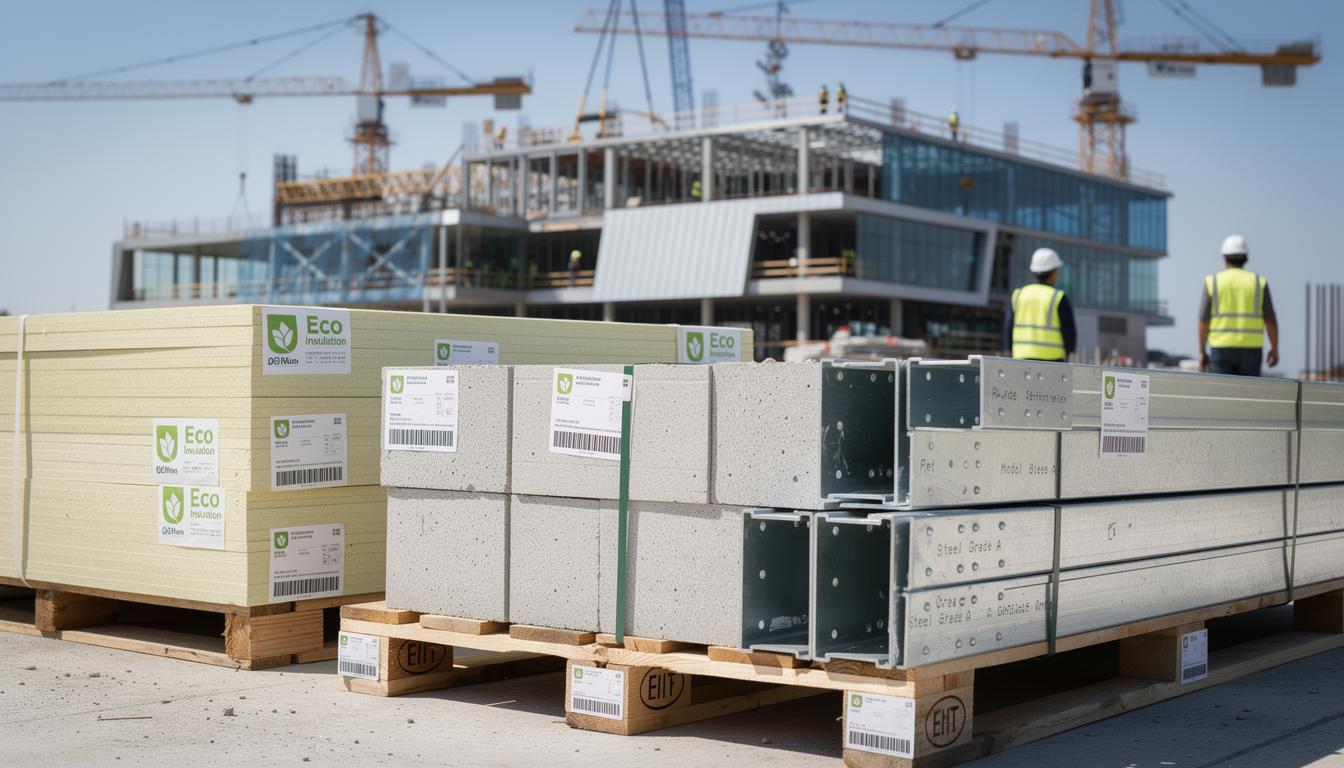
The year 2026 disorients, reshuffles certainty, and questions everything. Those who still speak of traditional building supplies barely cover half the story. Stale air and powder dust in a merchant aisle evoke something familiar, yet the truth eludes anyone stuck in the past. The quest for materials extends way beyond bricks, panels, or a box of fixings. The sector for construction supply flows, surges, then morphs again. Signs appear everywhere; demand increases, digital channels multiply, climate concerns squeeze both professionals and amateurs to act, not choose as before. Decision windows shrink. What persists? Only need: rapid access to the right resources, with less ecological footprint and real transparency holding up results.
One phase ends, another begins, and uncertainty transforms into a field of possibilities.
En parallèle : How Can Mushroom Cultivation Contribute to UK’s Circular Economy?
The current landscape of construction supply
Not only the old routine at your local merchant or that impersonal digital cart matters now; competition and alignment split the market in new ways. It takes just a glance: timber, insulation, aggregates, glazing, all assembled together with a purpose yet hiding subtler distinctions. The 2026 market covers every material that creates, modifies, secures, or dresses up any structure, large or small. Large volumes of cement, sheltering panels, smart insulations for shifting temperatures and humidity, and always those details: windows, security, decorative touches. Now, trade specialists and private individuals rarely cross paths, each navigating supply with their own motivation. Simplicity, cost containment for some; speed, performance, reputation for others. Specialists such as Licata illustrate how targeted providers adapt to these divergent needs in 2026's fast-moving environment.
Some need clear solutions, others lean into inspiration. Competition intensifies, but so does the scale of what's possible.
Dans le meme genre : What’s the Role of Machine Learning in Customizing Online Retail Experiences?
The structure and major segments of construction supply
Does splitting the market simplify the choice? Not really. Data provided by the UK government and heavyweights like B&Q or Jewson illuminates the shares below. Pause, if you will, to decipher this balancing act between small-town specialists and vast digital platforms, both chasing loyalty in very different ways.
| Category | Common Use | Estimated Market Share (UK, 2026) |
|---|---|---|
| Timber and Wood-Based Panels | Frames, paneling, decking | 25% |
| Insulating Materials | Thermal performance, acoustic comfort, fire resistance | 15% |
| Cement Compositions and Aggregates | Structural cores, sub-base, foundational blockwork | 20% |
| Roof Cladding Systems | Weather defense, style | 18% |
| Openings and Surface Finishes | Security, daylight entry, final detailing | 22% |
Numbers seldom capture the tug-of-war between nostalgia for hands-on service and the frictionless promise of next-day digital deliveries. Every neighborhood remembers hardware stores with stacks of timber out back. Today, glossy online operators challenge that loyalty with comparison engines, national delivery, and lower constraints on stock. You think tradition protects the old guard? Digital momentum refuses to slow down.
The supply chain and distribution networks in transformation
No one clings to memory when efficiency demands change. Old ways paired a handshake with expert advice, a known face at a regional store with reliable pickup. Now, in 2026, over 58 percent of procurement flows through digital interfaces and same-day options are not rare anymore. Familiar staff still operate vibrant local shops; yet the ability to order vast stocks without worrying about postcodes entices buyers away. Delivery no longer blocks any dream; comparison happens in moments, not days.
Should loyalty be tied to proximity or broadened by a frictionless, borderless supply experience? That question splits buying habits in two.
| Supplier Type | Reach | Distinct Strength |
|---|---|---|
| Physical Store Networks | Local, Regional | Instant pickup, real advice |
| Digital Suppliers | National, Growing | Broader catalogue, direct home or site service |
Direct online procurement now creates a crossroads: small brands joust with the biggest players, and size alone no longer guarantees advantage. At every turn, the choice multiplies, but so do risks, requiring careful strategy for anyone adapting to this landscape.
The sustainable revolution in construction materials
Fashions fade, but regulatory deadlines force realignment. No one sidesteps the hard questions now about the ecological impact of their sourcing habits. A decade ago, recycled aggregates or sheep-wool insulation drew little interest. The year 2026 showcases a cascade of new priorities, as the nation adopts the UK Green Building Standard and pushes for strict eco-compliance. Top projects pivot to recycled content, proper traceability, and efficient, low-impact sourcing. This shift means more than compliance. Carbon savings drive up property values, attract environmentally aware tenants, and silently become the market's mark of quality.
Material choice becomes a tool, not only for the planet but for profitability and brand image.
The adoption of eco-responsible and reprocessed materials
No one expects to miss the mark on sustainability and come out ahead, not anymore. Material catalogs fill with bamboo, reclaimed brick, cellulose insulation, or paints advertised for air-purification. The government's nudge or threat means change follows, fast. This new generation of building supply solutions commands attention, with visible impact but hidden benefits—think air quality and cost savings. Those without a strategy for sustainable procurement risk irrelevance as the ground shifts beneath their feet. The conversation inevitably returns: will a surface hold up, does a substitute aesthetic meet expectations, can any price penalty be managed? Today these calculations matter.
The circular economy's effect on building supply chains
Few words provoke more resistance than "reuse." Yet the circular approach invades all strategic discussions, driven by the DEFRA guidelines and emerging client demands. Gone the era of single-use thinking. With proper planning, beams earn a second life, rubble becomes tomorrow's base layer, and even carpets or claddings come with their use history attached. Resource efficiency, suddenly, marks reputation, not just margins. True, some still hesitate—logistics and warranty hurdles remain—that's no myth. Still, those prepared seize on competitive advantage, as cost and image collide with practical constraint.
- Clients request full traceability, even for small-scale projects
- Regulatory agencies expect transparent reporting, verified by digital records
- Adaptive strategies reward those who calculate whole-of-life performance
The digitization of sourcing and procurement
A century of paperwork vanishes, replaced by dashboards and cloud platforms. Supply chains expose once-hidden flaws; bad connections fade out, new best practices emerge. E-commerce means tangible results, not just novelty value. Decision-makers compare, scrutinize, adjust, and respond in real time. Catalogues run deep, prices and lead times update by the minute, and delivery windows grow ever more precise. If a £5 million project fails on a missed delivery, the system itself takes part of the blame, not just the individual. The risk of error shrinks as automation closes the gaps.
There was an evening in Birmingham, a chill warehouse, and a wave of panic—an order lost in paper shuffle. That panic, vanished now. "Real-time notifications saved the day," recalls a veteran site manager, "it took pressure off everyone and let us hit our timeline." Progress recasts everyday stress as strategic foresight.
Does e-commerce influence the choice of building supplies?
Comparison drives decision-making. Old routines no longer hold. Over 70 percent of suppliers now display complete stock online. Interactive showrooms reveal endless styles and surface options, pricing fluctuates, inventory moves—it's all visible. No one accepts silent delays or communication blackouts now. The client expects progress updates, evidence, accountability—digitization not only enhances efficiency but raises standards for everyone involved. Speed, flexibility, transparency: the new graces of the competitive market.
The rise of analytics and supply visibility
Supply lines traced on maps, inventories monitored quarter-hourly: data analytics instill confidence, anticipate bottlenecks, and improve negotiation. Predictive logistics direct vans across the UK; reporting tools render out-of-stock notices nearly obsolete. The nightmare of surprise shortages and reactive last-minute searching belongs to yesterday. Increased visibility becomes strategic advantage. Project delays decrease; reputations climb; teams relax, knowing automation supports critical decisions. In 2026, few admit to trusting intuition alone on big orders.
The technological pivot in modern building supply solutions
No need to picture tomorrow; innovation knocks hard. Sensor-based walls regulate moisture, self-adjusting glass blocks glare, modular kits snap into place pre-cut by robotics. Site safety rises, energy efficiency cracks old records. New products, such as hyper-insulating modules and connected fixings, spread rapidly. No more margin for error—projects execute at speed, mistake rates plummet. Industrial journals, from the Construction Products Association to on-the-ground retail feedback, cite rapid adoption. Every project now begs for integration of the freshest advances.
The arrival of smart technology in material solutions
Established crafts quietly incorporate tech: a fixing flags tension, a panel records its own placement, a pane shifts opacity with outdoor brightness. Teams adapt, sometimes eagerly, sometimes with shade of reluctance, but the statistics prove relentless: efficiency and outcome both rise. No one wants to spend three hours troubleshooting only to find a product flaw missed by manual checks. Testimonies pour in—"the system caught an error, days before installation," says a Manchester engineer, pride brushing his accent. Tradition and change never merge so closely as on a bustling worksite.
The modular shift and the rise of off-site fabrication
Urban planners expect convenience. Too few workers answering the call? Off-site fabrication holds an answer. Nearly thirty percent of UK residential construction now begins life as modules. Factories deliver almost plug-and-play rooms; logistics synchronize in near silence; waste diminishes, and overlooked details decrease. This isn't a cure-all, but the impact on timelines and quality measures proves dramatic. Suddenly, every supplier tweaks processes, cuts packaging, untangles old logistics models, and aligns with prefab requirements. Conventional categories blur and evolve—the door to tomorrow stands ajar.
The future of building supplies and related regulation
Regulations chart the future, not just compliance. Since the Building Safety Act 2022 came fully into force, origin, composition, and sustainability must appear in a transparent record for almost every product. The EU, always looming, intensifies carbon rules. UK providers pivot or step aside. Digital product passports create competitive pressure, cementing trust and market access as the sector professionalizes apace. Cleaner buildings mean real returns. Sustainability doesn't surface as a side concern—buyers drive the agenda, and demand for transparency fuels every reform.
Does demand drive construction supply trends?
Urbanization surges, skilled worker shortages tighten margins, expectations of eco-performance grow relentless. Data from the Office for National Statistics anchors this trend—population rise and housing demand refuse to ease. Green products soar in value and frequency, in both municipal and private builds. Volatile commodity prices encourage alternatives, redirecting demand back to local innovation and new resource management. Trends converge; supply chains adapt globally but never leave local inventiveness trailing. The UK market sets pace, and global observers adjust their own practices in response, waiting not for old norms to return but for new ones to solidify.